All businesses should be familiar with compliance, particularly when it comes to accessibility. These requirements benefit the public and ensure that disabilities don’t exclude people from participating in daily life.
Some of the main requirements of the Americans with Disabilities Act (ADA) include having clear and visible signage, accessible entryways, ADA-compliant websites, and more.
Here are several ways your business can follow ADA requirements for businesses so all customers can find their way.
1. Identify architectural barriers
Architectural barriers could prevent someone with a disability from accessing a space. This can include stairs, uneven flooring, a lack of seating, or hard-to-reach areas of your store. Your business needs to identify all architectural barriers and either remove or provide accommodations in some way.
For example, if you have an entryway with steps, you must have a secondary entryway with a ramp. Additionally, your business must have easily visible signage that directs people to the accessible entrance.
2. Create alternate ways to access your business
Your business may have architectural barriers that can’t be easily removed or changed. For example, if the sidewalk is too narrow, there might not be enough space to build a ramp with an accessible incline. In this instance, an accessible solution could be to provide curbside pickup or delivery options.
You’ll also want to communicate these alternatives to your customers on your company website, social media, and with highly visible signage like stainless steel lettering near your entryways.
3. Use ADA-compliant signage
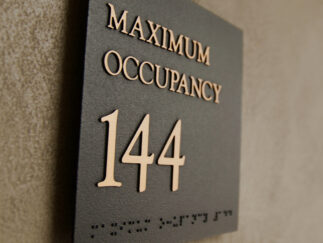
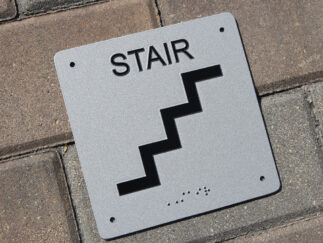
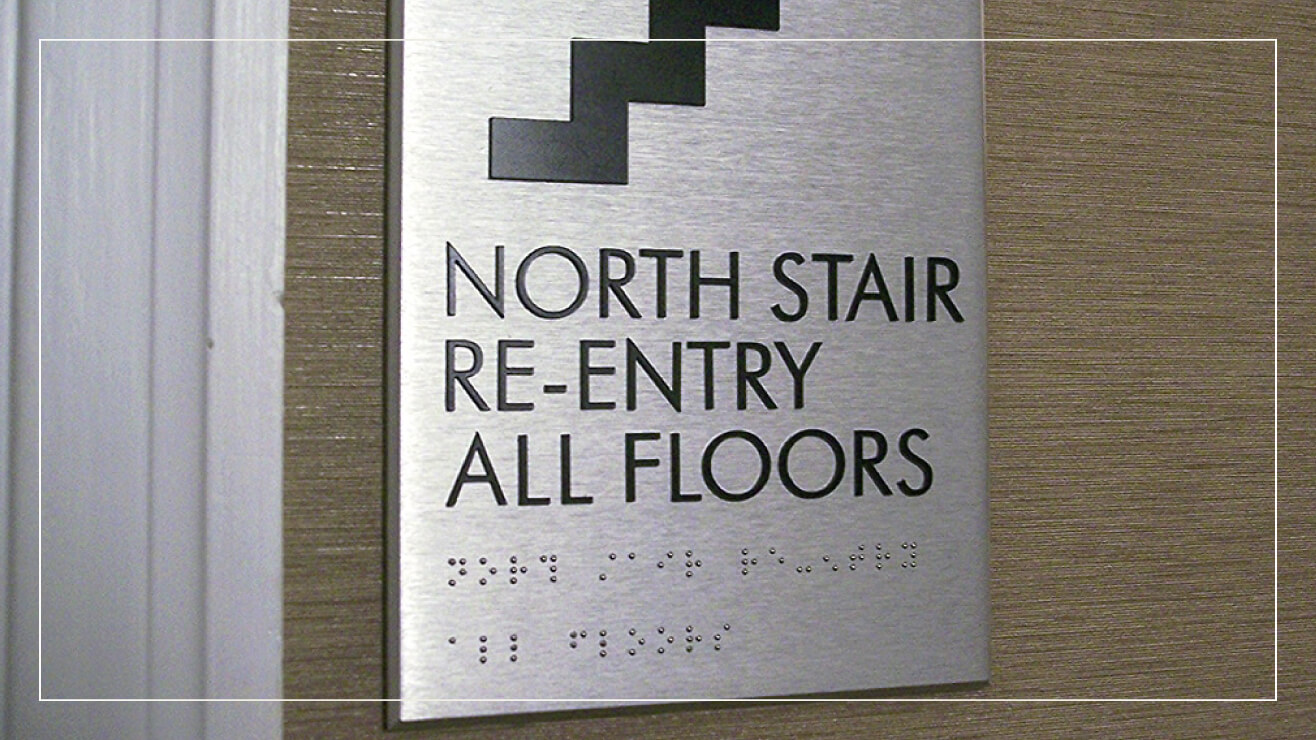
When you use signs to communicate accessibility, they must be ADA-compliant. These guidelines include using:
- High contrast colors
- Easy-to-read fonts
- Tactile (braille) characters
- Correct pictograms
- Appropriate size and height
- Visible location
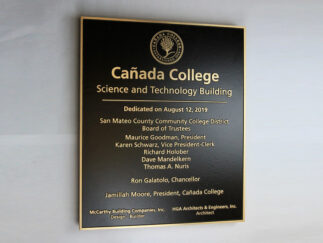
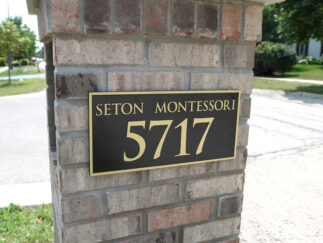
You can use a variety of durable sign materials for ADA-compliant signage, like bronze ADA signage, which looks professional and lasts longer than cheaper alternatives.
4. Assess your parking and business entrances
There are specific ADA requirements for your business’s parking and entrances. One of the ADA parking requirements is that you have one accessible parking spot for every 25 parking spots (or at least one accessible spot if there are fewer than 25 spots total.)
The accessible spots must be wide enough for people who use wheelchairs or other mobility aids to safely exit their vehicles. It also requires that one-sixth of all parking spaces be large enough to accommodate a van.
Ramps are another way to create more accessible parking and entryway options. If your only entrance has steps, a ramp can be a solution. If there are multiple entrances, you should use aluminum ADA signage to identify accessible entrances.
5. Integrate website accessibility
Your website is a good way to brand your business, so it’s important that all your customers can use it effectively. Ensure your website is easy to use for people who are visually, intellectually, or hearing impaired.
There is a special set of standards that are widely used and adhered to, called the Website Content Accessibility Guidelines (WCAG). WCAG has a checklist of criteria that they have identified as making a website accessible to people with disabilities. These standards include:
- Using colors with proper contrast
- Adding alt text to images
- Compatibility with screen reading software
6. Make it known that you welcome service animals
Businesses are required to welcome service animals in any area where the public is allowed to go. There are exceptions to this requirement, such as situations when sanitation could be an issue, but businesses need to make reasonable accommodations. For example, a hotel can ban service animals from its indoor pool but can’t ban them from the pool room.
One of the most convenient ways to communicate that service animals are allowed in your business is to have custom signage at your accessible entryways.
7. Use modular furniture
The right furniture is important for both customers and employees. For employees, the ADA requires all workplace furniture (chairs, desks, etc.) to be a certain height to accommodate wheelchairs or crutches.
Combining motorized standing desks with adjustable chairs makes accommodating any customer or employee easy.
8. Install elevators
If your business has multiple levels open to the public, you must have elevators for people with mobility issues. There are a few requirements to ensure an elevator meets ADA standards:
- Buttons: Buttons must be an appropriate height and marked with Braille.
- Operation: The doors must give passengers ample time to enter the elevator.
- Path: There must be an accessible way to get from the entrance to the elevator.
- Signage: The ADA-accessible elevator must be clearly marked.
- Size: At least one elevator car must be large enough to accommodate mobility aids, such as wheelchairs.
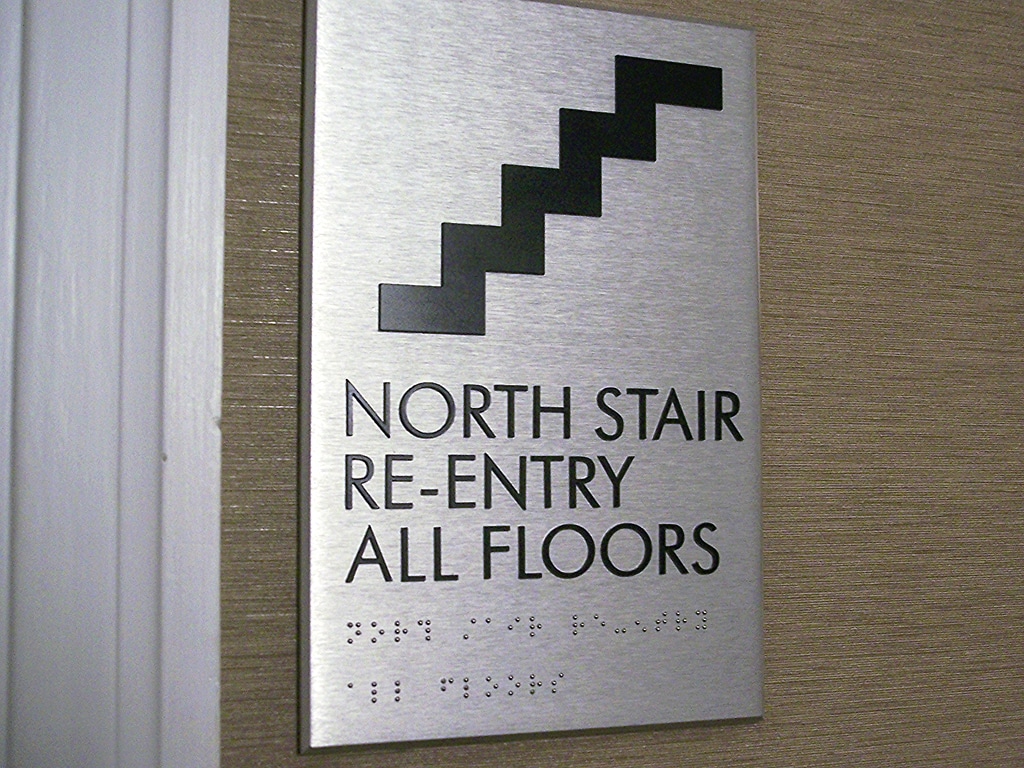
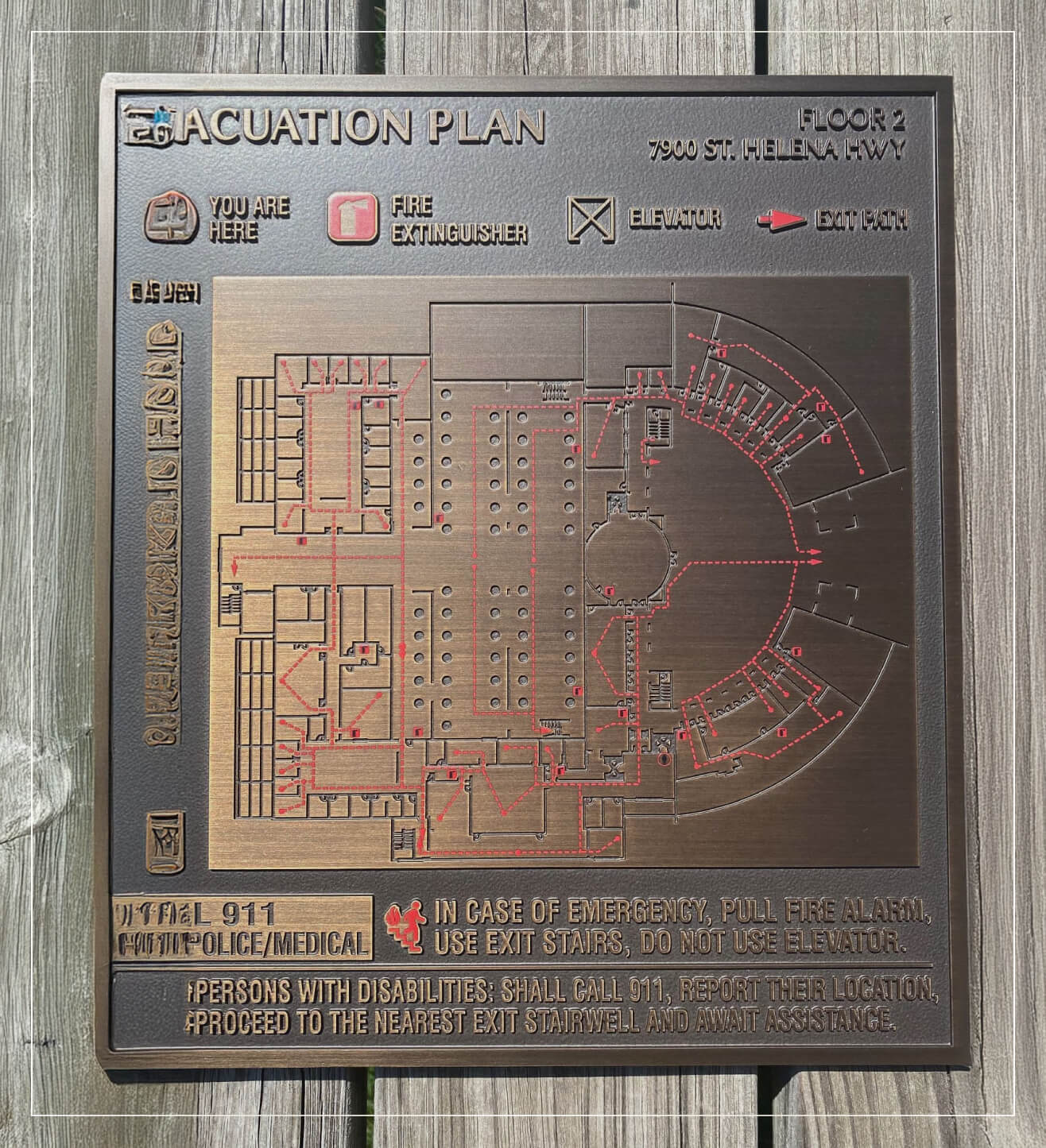
In addition, businesses with multiple floors need to have clearly marked fire escapes. Bronze fire escape signage is an effective and professional way to identify these areas.
9. Upgrade restrooms
Make sure that all restroom locations have at least one accessible stall. A few of the biggest ADA restroom requirements include:
- Hand-operated flush handles must be on the side of the toilet with the most clearance.
- There must be a grab bar beside and behind the toilet.
- The toilet paper dispenser must be accessible from the toilet.
- There must be enough space for a person using a wheelchair to turn and navigate, even if the door is open.
- All handles for the sink must be accessible.
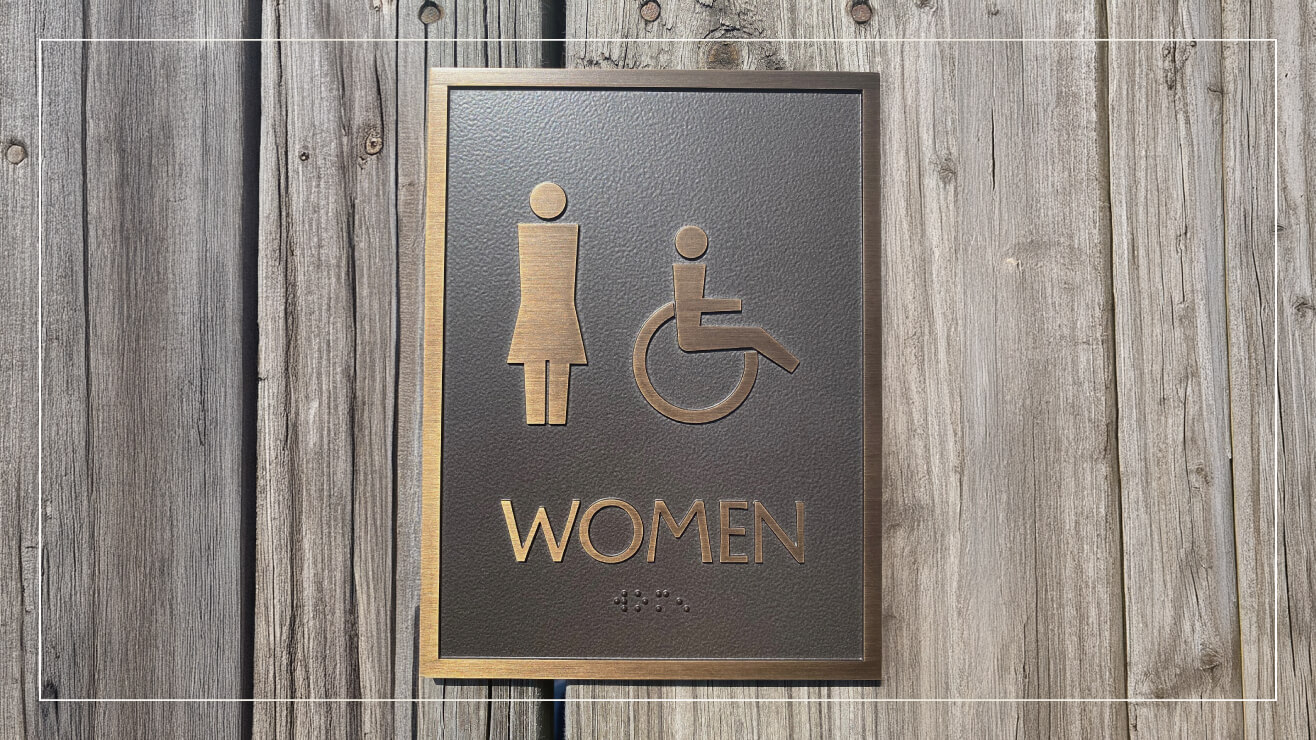
You’ll also need appropriate signage so users know which restrooms or stalls are accessible.
10. Install fixtures appropriately
You must install certain fixtures appropriately, such as light fixtures, elevator buttons, door handles, water fountains, telephones, and shelving counters.
For example, heavy doors should have a button that opens them automatically for anyone with potential mobility issues.
Easy swaps like motion sensor light switches (which also have environmental benefits) also ensure no one gets left in the dark.
Are any businesses exempt from ADA requirements?
Very few businesses are exempt from ADA requirements. Typically, exempt businesses are religious organizations or social clubs where members pay fees. However, there are certain situations where ADA requirements are different:
- Historic structures: There are different standards to protect “historic properties” while maximizing accessibility.
- Budgetary constraints: If the cost of constructing accessible alterations costs more than 20% of the overall project, then certain alterations are prioritized to ensure the price doesn’t exceed 20%.
- Residency: Places of residency, such as college dorms, have different standards depending on the number of people who live there.
Funding accessible requirements
ADA requirements can be costly, and there aren’t any ADA exemptions for small businesses. However, there are some ways business owners can alleviate this financial stress. First, as we mentioned above, there’s an economic limit to the requirements of accessible projects during a renovation.
If fulfilling these requirements is 20% of the total budget or more, then the business should prioritize renovations in this order up to that 20% threshold:
- Accessible entrance
- Accessible route to the renovated area
- Accessible restroom
- Accessible phone
- Accessible drinking fountain
- Other elements
Businesses can also claim a deduction of up to $15,000 per year, depending on their size, revenue, project costs, and other factors.
Level Up Your ADA Signage with Impact Signs
Let your employees and customers know they’re welcome, no matter their differences. With help from Impact Signs, you can ensure your business’s accessible features are clearly marked for everyone.
Get a quote today to see how we can help you meet ADA’s requirements for businesses.